
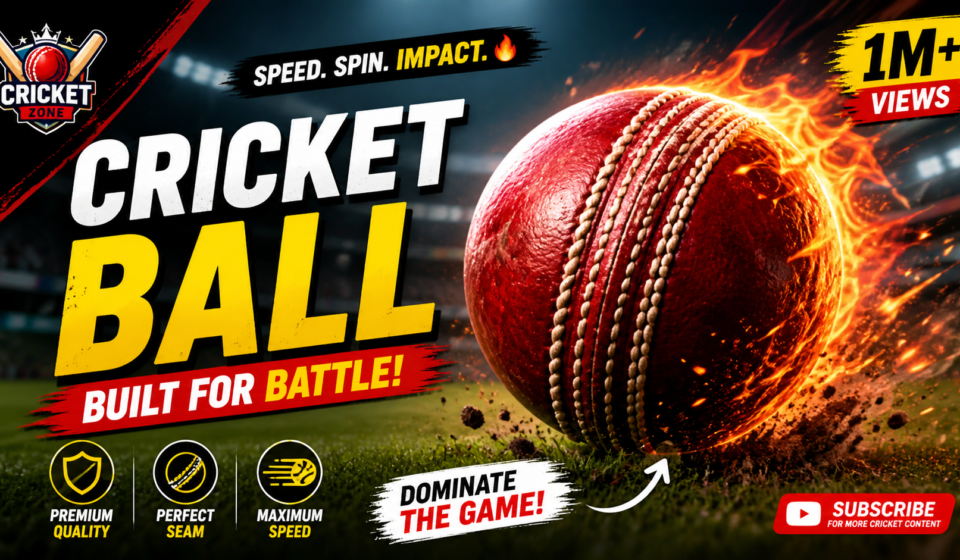

Cricket has evolved over centuries into a sport enjoyed by millions around the world. Among the essential elements of cricket, the cricket ball stands out as one of the most important pieces of equipment. A cricket ball is not merely a sphere used in the game; it is a highly engineered tool designed to influence the pace, spin, and swing of the game. Understanding the types, uses, and how to choose the right cricket ball is crucial for players ranging from amateurs to professionals. This guide explores every facet of the cricket ball in detail, helping enthusiasts make informed choices in 2026.
What is a Cricket Ball?
A cricket ball is a hard, solid ball made from layers of cork and string, covered with high-quality leather. Traditionally, the ball is made by wrapping cork around a core and layering it with tightly wound string, followed by a leather casing. The stitching or seam is prominent and contributes to the ball’s performance. Unlike balls in other sports, the cricket ball is carefully designed to endure long innings and varying pitch conditions. Its weight, size, and seam pattern are strictly regulated under the Laws of Cricket, ensuring uniformity and fairness in professional matches.
The standard weight of a cricket ball ranges from 155.9 grams to 163 grams for men and 140 grams to 151 grams for women. Its circumference usually measures between 22.4 cm to 22.9 cm for men and slightly smaller for women. These dimensions allow for precise control, swing, and spin, making the cricket ball a sophisticated tool rather than just a simple piece of sports equipment.
Anatomy of a Cricket Ball
Understanding the anatomy of a cricket ball is crucial for anyone looking to use it effectively. A cricket ball comprises three main parts: the core, the winding, and the leather casing.
- Core: The inner core is typically made of cork, sometimes mixed with rubber to adjust hardness and bounce. This core determines the weight and initial bounce characteristics of the ball.
- Winding: Surrounding the core is tightly wound string or yarn. This layer provides structure, increases durability, and allows the ball to retain its shape during long periods of play.
- Leather Casing: The outer layer is high-quality leather stitched with six rows of thread, creating a pronounced seam. The leather is polished and treated with wax or grease to enhance swing and shine.
The seam is particularly important as it aids bowlers in controlling spin, swing, and bounce. A raised seam allows fast bowlers to grip the ball more efficiently, producing movement off the pitch and in the air.
Types of Cricket Balls
Cricket balls come in different types, each suited for specific formats and playing conditions. Understanding these differences is essential for selecting the right ball for practice or competition.
1. Red Cricket Ball
The red cricket ball is traditionally used in Test cricket and longer formats. It is made from high-quality leather and maintains its hardness and shine for extended periods. Red balls are known for their durability, which is essential for multi-day matches. The dark color contrasts well with the white clothing worn by players, making it visible even in bright daylight.
2. White Cricket Ball
White balls are commonly used in One Day Internationals (ODIs) and Twenty20 (T20) formats. They are made similarly to red balls but are dyed white to enhance visibility under artificial lights. One challenge with white balls is that they tend to get dirty faster and may lose their shine more quickly, which can affect swing. Manufacturers often add protective coatings to extend their lifespan during limited-overs games.
3. Pink Cricket Ball
The pink ball has gained popularity in day-night Test matches. It combines features of both red and white balls. Its color ensures visibility under lights while maintaining the durability required for Test cricket. Pink balls are slightly softer than red balls and often include additional polishing treatments to prevent excessive wear during long matches.
4. Leather vs. Synthetic Balls
While professional cricket uses leather balls, synthetic or rubber-coated balls are popular for casual play and indoor cricket. These balls are lightweight, safer for beginners, and less expensive. However, they do not replicate the behavior of real cricket balls, especially concerning swing and seam movement.
How Cricket Balls are Made
The production of a cricket ball is an intricate process combining craftsmanship with modern manufacturing techniques. High-quality cricket balls are still hand-stitched, although the core and winding may be machine-assisted for consistency.
- Core Formation: Cork cores are shaped and compressed into uniform spheres. The cork may be combined with natural rubber to control bounce and hardness.
- Winding: The core is wrapped with string or yarn in layers, which adds structural integrity and contributes to weight and balance.
- Leather Preparation: Leather for the outer casing is tanned, dyed, and polished. The leather is carefully cut into pieces, usually four, and stitched together to form a spherical shape around the core.
- Stitching the Seam: Skilled artisans stitch six rows of thread around the circumference of the ball, creating the prominent seam. The seam is critical for swing, spin, and grip.
- Final Treatment: The ball is polished and sometimes coated with wax or grease to enhance shine and durability. Each ball is inspected for balance, seam uniformity, and surface quality before being approved for sale.
This meticulous process ensures that professional cricket balls maintain consistent performance across matches and formats.
Uses of a Cricket Ball
The cricket ball is central to every aspect of the game. Its uses extend beyond simply hitting and bowling.
- Bowling: Fast bowlers rely on the seam and swing to challenge batsmen, while spinners manipulate the ball’s rotation to generate turn and deceive opponents. The ball’s hardness and seam are crucial for controlling pace, bounce, and swing.
- Batting: Batsmen must understand the ball’s movement to play defensive and attacking shots effectively. The type of ball used can significantly influence shot selection and timing.
- Fielding: Fielders must track and catch cricket balls, which can travel at high speeds. The ball’s weight and hardness make fielding challenging but essential in scoring and saving runs.
- Practice: Players use cricket balls during nets, drills, and specialized training sessions. Coaches often select balls based on skill level, pitch type, and match format to simulate realistic game conditions.
- Professional Matches: Test, ODI, and T20 matches have specific ball regulations to ensure fairness and consistent gameplay. Cricket balls are replaced periodically in limited-overs formats to maintain visibility and performance.
How to Choose the Right Cricket Ball
Selecting the right cricket ball is crucial for performance, safety, and longevity. Several factors should be considered when purchasing a cricket ball in 2026.
1. Purpose
Determine whether the ball is for professional play, practice, or casual games. Professional matches require high-quality leather balls, while training can be conducted with synthetic or lower-grade leather balls.
2. Weight and Size
Ensure the ball conforms to standard specifications. Men’s cricket balls should weigh 155.9–163 grams, while women’s balls are slightly lighter. The size should be appropriate for age and skill level, particularly for youth cricket.
3. Seam Quality
The seam is critical for swing and spin. Check that the stitching is uniform, tight, and prominent. Poor seam quality can affect performance, particularly for bowlers.
4. Durability
High-quality cricket balls should withstand repeated use without significant wear. For long-form cricket, a durable ball maintains its hardness and seam structure over several overs.
5. Visibility
Red, white, and pink balls are suited to different match conditions. Consider the lighting and clothing of players to choose a ball that offers maximum visibility.
6. Brand Reputation
Brands such as Kookaburra, SG, and Dukes are renowned for producing high-quality cricket balls. Established brands offer consistent performance, better durability, and compliance with international standards.
7. Price Consideration
While professional-grade balls are more expensive, they offer longevity and better performance. Synthetic or training balls are cheaper but may not replicate the behavior of a professional ball.
Maintaining a Cricket Ball
Proper maintenance extends the life of a cricket ball and ensures consistent performance.
- Polishing: Regular polishing with leather-friendly oils or wax helps maintain the shine and hardness of the ball.
- Storage: Store cricket balls in a dry environment to prevent moisture damage. Avoid leaving balls in direct sunlight, which can crack the leather.
- Cleaning: Remove dirt and mud after play using a soft cloth. Do not use harsh chemicals that can damage the leather.
- Usage Rotation: For practice, rotate between multiple balls to reduce wear and tear on a single ball.
- Inspect for Damage: Regularly check the seam and surface for cracks or loose stitching. Replace balls showing excessive damage to avoid injury or inconsistent play.
Innovations in Cricket Balls for 2026
The design and manufacture of cricket balls continue to evolve. Innovations in 2026 focus on performance, durability, and visibility.
- Enhanced Synthetic Coatings: New coatings help maintain shine longer, particularly for white and pink balls in limited-overs cricket.
- Improved Seam Construction: Advances in stitching techniques allow better control for swing and spin while reducing seam wear.
- Eco-Friendly Materials: Some manufacturers are exploring sustainable alternatives to traditional cork and leather without compromising performance.
- Specialized Training Balls: High-tech training balls simulate different pitch conditions and swing patterns, helping players develop skills more efficiently.
Frequently Asked Questions about Cricket Balls
What is the difference between red, white, and pink cricket balls?
Red balls are used in Test cricket, white balls in ODIs and T20s, and pink balls in day-night Tests. The main differences are visibility, hardness, and durability.
How long does a cricket ball last in professional matches?
In Test matches, a red cricket ball can last up to 80 overs, while white balls in limited-overs games are often replaced every 34–50 overs for optimal performance.
Can beginners use professional cricket balls for practice?
While possible, beginners may find professional balls too hard and heavy. Synthetic or training balls are recommended for initial practice.
How is swing generated with a cricket ball?
Swing occurs when one side of the ball is polished and the other rough. Bowlers use seam position, wrist angle, and speed to generate conventional or reverse swing.
Conclusion
A cricket ball is far more than just a piece of sporting equipment. Its design, type, and maintenance can dramatically affect performance in cricket. From red to white to pink, each ball has its unique characteristics, and selecting the right one depends on the format, purpose, and skill level. As cricket continues to evolve in 2026, players must stay informed about innovations, maintenance practices, and ball specifications to excel on the field. Whether you are an aspiring cricketer, a professional player, or a casual enthusiast, understanding the cricket ball in detail is key to enjoying the game to its fullest.